add on

add on

Pages

1.9.12

The Great Brain

The Great Brain
by John D. Fitzgerald

I have been frantically reading this week, preparing for my first book club meetings.  We have had great success this fall, with nearly 200 kids registered and preparing to join together for fun as they eat a meal and discuss a just-read book.  I took a break from the pace to have lunch with a fellow reader and library lover.  We were discussing an upcoming meeting with the director of our local library system.  We are getting a children's library! And, I am trying to find a spot for my "reading just for fun" advocacy.  So, please pardon me if I give the Central Arkansas Library System a shout out and a big thank you for its support of children.

Anyway, at lunch my friend mentioned that she has had to stop listening to the radio and the news because of all of the political chatter.  I told her, "I can appreciate your point of view, but I just can't tear myself away." I keep hoping that one day they will be discussing policy and not the Mormon faith.  But, I guess this might mean I have something to learn.  This point was driven home when I picked up the book selection for 4th grade, The Great Brain by John D. Fitzgerald, and discovered on page 1 this line--"Adenville had a population of 2500 people, of which about 2000 were Mormons and the rest Catholics and Protestants."  Please do not misunderstand, this is not a religious book, it was just a strange coincidence, and I found it fascinating.  

This book is a delightful look at the turn of the last century.  It takes place in Adenville, UT in 1896.  In my experience, children of 2012 are amazed to find that most people can't imagine having a toilet indoors, that ice cream can not be purchased in a store, and that most toys were homemade.  These historic realities unfold as John's older brother Tom puts his "great brain" to work to con the children and the adults in the community out of their last penny.  It is simply told through chapters that read like short stories and is filled with many life lessons.  Among them, be kind to all, the importance of family, and that the adults in a child's life can be depended on to help in a crisis.  I will let you know how it plays with this current brood of readers.  If you've read it yourself, let me know what you think of it.

29.8.12

A Friend I Someone Who Likes You

A Friend is Someone Who Likes You
by Joan Walsh Anglund

My multiple lives were bound to collide at some point.  Moment One-I have an assignment in my writing class to bring a Non-Fiction picture book to class.  We are preparing to create our own for our first project.  Moment Two- I received a handwritten note from my roommate at the Arkansas Women Blogger Conference.  In it, she expressed her thanks for the ride to the mountains and for the fun we shared.  I was reminded of how great it is to have close friends that love you just because.  Add them together and you get this lovely little book by Joan Walsh Anglund, A Friend Is Someone Who Likes You.

Written in 1958 this little primer about friendship is a must on every child's book shelf.  The prose lets the reader know that everyone has the friends they need.  It launched Joan Walsh Anglund's career.  She went on to write and illustrate more than 120 books, which have been translated into 17 languages.  The titles include fiction, non-fiction and poetry.  Another of my favorites is Childhood is a Time of Innocence.  Each of these books contains her signature children whose faces only had two eyes.

Not only did we have the books when I was a child, but I had a small doll that looked just like Anglund's characters. Here she is. She still guards my books and reminds me that everyone has at least one friend.  "Where did you find yours?"

27.8.12

An American Exodus

An American Exodus
by Dorothea Lange and Paul Taylor

I spent the weekend in the Ozark Mountains with a group of fantastic women.  I attended the Arkansas Women Blogger Conference and learned more than is possible about the worlds of blogging and social networking.  As I walked the halls of the buildings of the Ozark Mountain Folk Center, I kept seeing the images of the old timers who once walked the same halls.  All I could think of was the amazing work done by Dorothea Lange and Paul Taylor in the book An American Exodus.

In the piece of non-fiction, Lange and Taylor, document the movement of more than 300,000 migrant workers to California during the Great Depression.  It combines Dorothea Lange's unmatched documentary photography skills to the oral history captured by her husband, Paul Taylor, in accessible prose.  It tells the story of the impact of the Depression on the rural poor and is a nice contrast to the overwhelming amount of information about the effects of the time on the urban poor.

It isn't a book that needs to be read through from beginning to end. It would serve well as the centerpiece of a family discussion of the past, especially since references to the Great Depression are so often found in the media today.  Find a photograph that is meaningful to you or your child and read about the person it hopes to reflect.  It is not currently in print, so get a copy of it from you local library.  If you find that you  want to include it in your own library, it can be purchased on the used market.

23.8.12

The Secret Garden

The Secret Garden
by Frances Hodgson Burnett
I started a new writing class today.  The take away assignment was to write a page or two, doubled spaced, about a childhood memory about reading. I rode the city bus to campus to avoid parking horrors, and on the ride home, I opened my writer's notebook to catalog the memories flooding into my mind.  As I sorted them, I decided to write about the Book Mobile so that I could reach my assignment goal of two pages.  But as the day has progressed, I keep coming back to my mother reading me The Secret Garden at bedtime. The cover to the left is the one of my childhood.  

At first I did not like Mary at all.  She was rude.  She was sour.  She was unfriendly.  I had nothing in common with her, but envied her adventure to a new land.  My mother kept reading and as the story unfolded, I finally found a connection to Mary.  She asked for a bit of ground.  My grandmother regularly set me outside with a spoon and a bowl in the dirt for a morning's occupation.  We both grew in the dirt.  We both learned about ourselves in the dirt.  We found ourselves in the garden.  It is a wonderful tale.  And it is not just for girls!  Dickon and Colin are beautifully developed boy characters.  As a matter of fact, Dickon, a boy who could "talk" with the animals, is one of my son's first and favorite friends from literature.

To help with the temptation we have to judge a book by its cover, puffin classics has a new addition with updated art. There are also many additions that only have our friend the robin on the cover, if you are trying to get a boy interested.


21.8.12

Hunger Games-Wizard of Oz

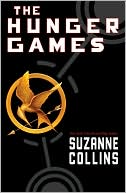
The Hunger Games
by Suzanne Collins

So, the movie came out the weekend.  We have bought it and watched it.  My son has actually watched it twice.  I was struck by the details of the novel that were left out and by the art direction of the movie.  District 12 looked just as I imagined, but the Capital was so much more.  All I could think of, as I watched, was how much the Capital reminded me of the Emerald City.  And the all powerful Oz, or in this case President Snow, acting as the puppet master.

Watching the movie has made me add the Hunger Games back to my "to read" list.  I am always up for a reread.  And with this book and the attention given it by young readers, I feel I should know my stuff.  It has also piqued my interest in rereading The Wonderful Wizard of Oz by L. Frank Baum. 

A few words on rereading...  It is one of my favorite occupations.  I tend to give over to my need to know how the story ends and rush through on my first attempt.  When I pick up a novel to reread, I find little jewels left by the author.  Those brief allusions that make me feel like a member of an exclusive club or some sub-theme that makes me see the text in an entirely new way.  If this is not already a part of your reading practice, you might want to give it a try.  My first attempts at convincing my son of this practice were met with "But Mom, there are so many books and so little time."  This is true, but a great book is always waiting to tell you just a little bit more.

19.8.12

Revolver

Revolver
by Marcus Sedgwick

I have a fascination with the West.  Wyatt Earp, Doc Holliday, any lone gunman really, making his way through the West catches my attention.  My first great love in the Western world was Lonesome Dove by Larry McMurtry.  And, if you are looking for a good short story, with a hero toting a gun, you can never go wrong with Elmore Leonard.  So you can image my glee when I read this cover:  Revolver:  A menacing stranger. Stolen gold. And A loaded gun.

Because I am only fair at creating drama on the page, let me offer you the overview from the publisher:

"A taut frontier survivor story, set at the time of the Alaska gold rush.  In an isolated cabin, fourteen-year-old Sig is alone with a corpse: his father, who has fallen through the ice and frozen to death only hours earlier. Then comes a stranger claiming that Sig’s father owes him a share of a horde of stolen gold. Sig’s only protection is a loaded Colt revolver hidden in the cabin’s storeroom. The question is, will Sig use the gun, and why?"

I truly enjoyed this book.  It is currently being passed from student to student at my son's school.  Every time I think I might get it back, I am told, "OH, so and so is reading it now."  Well, that is the job of books.  The artful descriptions really caught my attention.  I was actually cold the entire time I was reading it. Just thinking about it makes me wonder where my jacket is.  

If you are as fascinated by America's beginnings as I, give this book a try.  You will end up in San Fransisco for your troubles-just like any frontiersman would dream.

16.8.12

Charlie and the Chocolate Factory

Charlie and the Chocolate Factory
by Roald Dahl

My son crawled next to me in bed last night for an hour of reading.  I am finishing In the Garden of Beasts by Erik Larson and he is reading Mines of the Minotaur, the 3rd in the companion quartet, by Julie Golding.  As we lay there in our little house, I had a flicker of the image of Charlie's Grandparents, all four, sleeping in the middle of the small but, loving home created for them by Roald Dahl.

James and the Giant Peach (another novel by Dahl) is one of the first stories I remember my mom reading to me as a child, but I have to admit, I love Charlie more.  His circumstances pull at my heart strings.  The happiness that abounds in his small and rundown home gives me hope.  I laugh and marvel at the wretched stereotypes who are the winners of the golden tickets-especially the t.v. crazed Mike-how prophetic!  I am entertained by the queer and sometimes frightening Willie Wonka.  But mostly, I love the warnings given by the um pa-lumpas.

This is a must read!  And in this case, a must watch.  The movie adaptations, Willie Wonka and the Chocolate Factory, are both terrific.